
2201 Dupont Dr., Irvine, CA 92612
© 2026 Glidewell. All rights reserved.
800-854-7256 USA
A practical framework for matching the right solution to the right patient, faster.
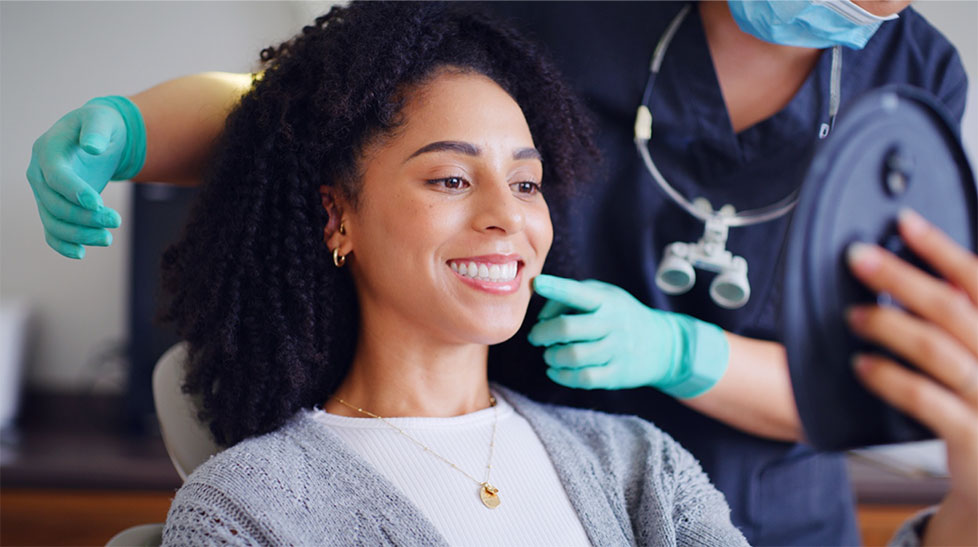
Every missing tooth tells a different story. The patient in chair one has abundant bone, good health and a clear preference for a fixed solution. The patient in chair two has significant resorption, a compromised medical history, and a tight budget. Both need tooth replacement. Neither should get the same recommendation.
That’s the challenge with tooth replacement treatment planning: the decision tree branches quickly, and the consequences of starting down the wrong path compound over time — for the patient’s health and your schedule. This guide offers a high-level framework for thinking through the decision systematically, using four key variables to match the right solution to the right patient. It also provides a full-arch decision guide for clinicians managing the most complex end of the replacement spectrum, which is an essential ingredient to long-term success in implant dentistry.
Before selecting a restoration, every tooth replacement case should be evaluated against the same core variables: the patient’s overall health, their oral anatomy, available bone volume, and their financial situation. None of these factors operate in isolation. The best treatment plan is the one where all four align around a solution that is clinically appropriate, procedurally feasible, and realistic for the patient to accept and maintain.
Systemic health is the first and most fundamental filter in implant treatment planning. Systemic diseases play a vital role in treatment planning and implant therapy for patients, with well-documented effects on wound healing, bone metabolism, and implant success. Conditions including uncontrolled diabetes, active autoimmune disease, current bisphosphonate or antiresorptive therapy, and certain cardiovascular conditions may limit surgical candidacy, alter healing timelines, or shift the calculus toward non-surgical alternatives.
Advanced age is not an absolute contraindication to implant therapy, but clinicians must understand the physical, metabolic, and endocrine changes associated with older patients before initiating treatment. These include potentially longer healing periods, more challenging bone quality, and increased susceptibility to drug interactions.
The practical takeaway: A thorough medical history and current medication review should precede any treatment recommendation. For patients with compromised health, nonsurgical options like a fixed bridge or removable SLM-printed partial denture may be the clinically responsible starting point.
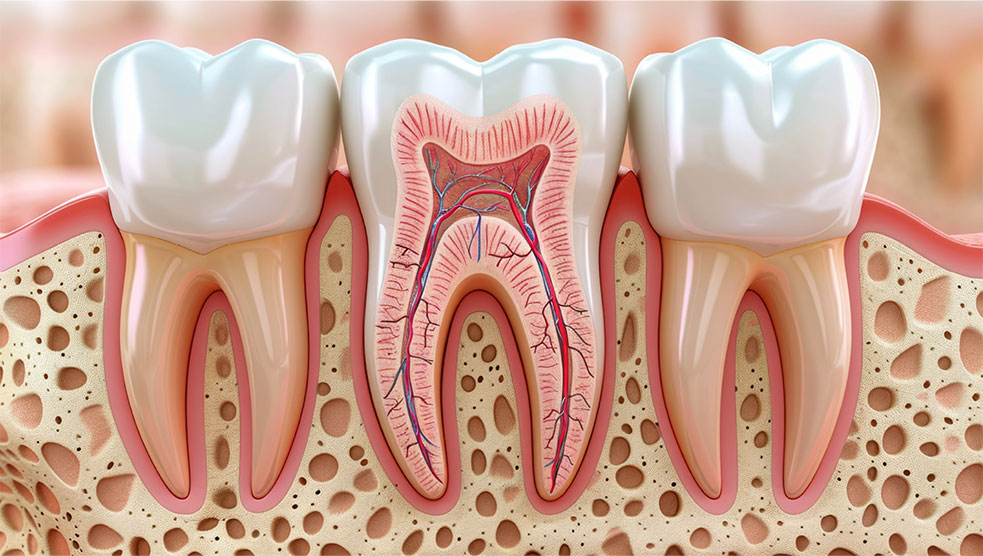
The number of missing teeth, their location in the arch, the condition of adjacent dentition, and the quality of surrounding soft tissue all shape what is achievable.
For single-tooth replacement with healthy adjacent teeth, an implant-supported crown is typically the gold standard, as it preserves neighboring teeth and provides a standalone root that functions like a natural tooth. A fixed bridge, the most common non-implant alternative for a single tooth, involves preparing adjacent teeth to serve as abutment support — a tradeoff that sacrifices healthy tooth structure and does not stimulate natural bone beneath the pontic, which can lead to gradual resorption over time.
For multiple missing teeth in a span, an implant-supported bridge eliminates the need for a separate implant at every site while maintaining a fixed, nonremovable result. For patients with extensive dentition loss or full edentulism, the conversation shifts to full-arch solutions, where the range of options widens significantly (see Full-Arch Decision Guide below).
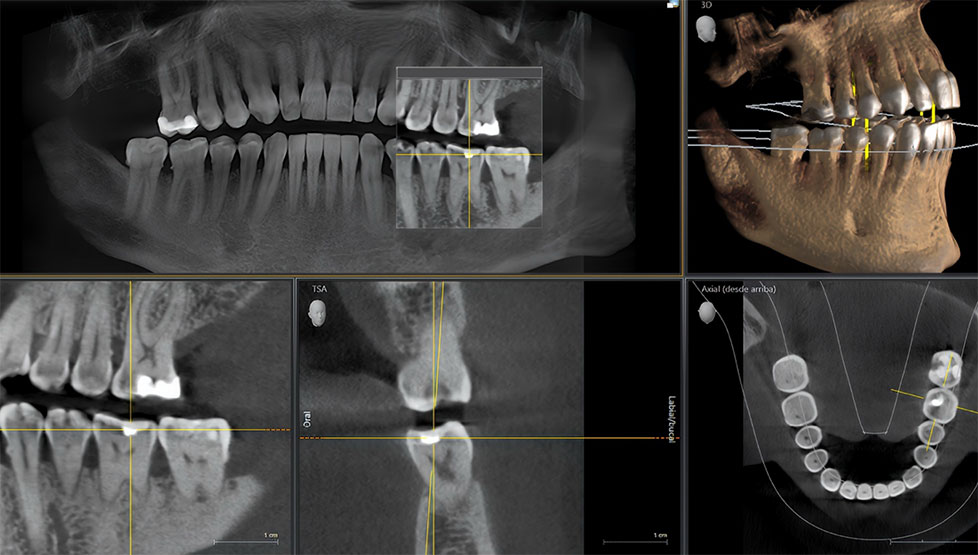
Available bone is one of the most clinically decisive variables in any implant case. When a tooth is lost, it is possible to lose 30–60% of bone volume in width, height, or both within the first few years, which can directly impact the ability to place an implant later without additional grafting procedures.
Three-dimensional digital treatment planning gives both the digital treatment planning team and the doctor a detailed picture of bone volume and surrounding anatomy — providing the information needed to move forward with confidence. CBCT imaging has become the standard of care for presurgical bone assessment, enabling a prosthetically driven approach that positions the restoration first and works backward to determine ideal implant location.
When bone is insufficient, the path forward depends on the degree of deficit and the patient’s candidacy for grafting. Ridge augmentation and guided bone regeneration can restore volume prior to implant placement, but they add time, cost, and procedural complexity. For patients who cannot receive bone grafting due to health or financial reasons, implant-retained overdentures should be discussed — requiring a minimum of two implants in some cases, while still delivering meaningful improvements in stability and function over conventional dentures.
Budget shapes treatment planning in ways that practitioners sometimes hesitate to address directly. But clarity here is in the patient’s best interest. Unaddressed financial concerns lead to delayed treatment, partial case acceptance, and downstream complications that cost more to resolve.
Each tooth replacement option fits different needs and budgets. Dental implants are typically the best long-term option because they look natural, last the longest, and preserve jawbone health. But bridges are a sound fixed, nonsurgical alternative for moderate budgets, and partial dentures offer the most affordable solution for patients who need to replace multiple teeth quickly.
For practices looking to make implant therapy more financially accessible, the Glidewell HT™ No-Charge Implant Program offers a compelling model: When clinicians restore their implant cases with Glidewell’s implant lab, the Glidewell HT Implant is provided at no charge, with a point redeemable for one implant issued for each site restored. This effectively reduces the cost structure of the surgical phase for practices already routing restorative work through Glidewell, lowering the bar for patient case acceptance without compromising care quality.
Use this checklist at the start of every tooth replacement case to ensure the four key factors are clearly assessed before a recommendation is made:
Patient Health
Oral Anatomy
Bone Volume
Finances
Full-arch tooth replacement is where the decision framework requires its greatest depth. The spectrum of options runs from conventional complete dentures to fixed zirconia implant prostheses, and every point on that spectrum has a patient it serves well and a patient for whom it would be inappropriate. Understanding the clinical, anatomical, and financial logic behind each option makes it possible to arrive at the right recommendation with confidence rather than uncertainty.
Conventional Complete Denture
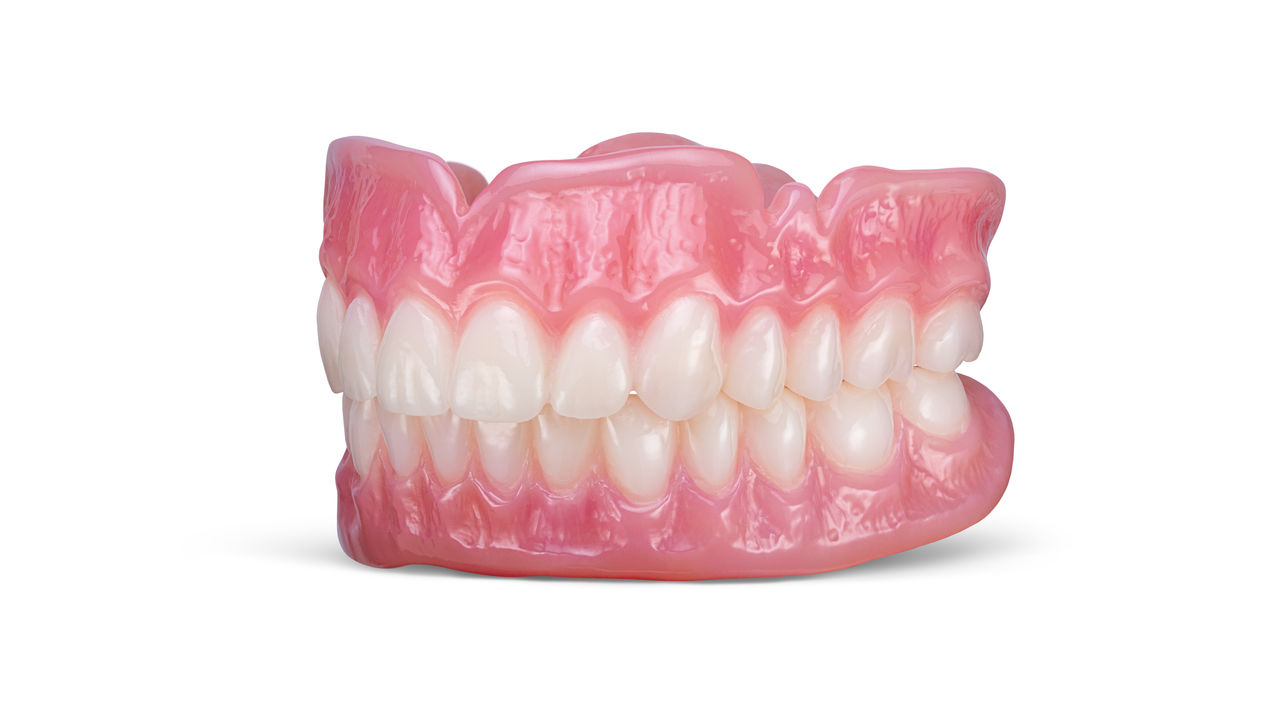
Simply Natural™ Digital Dentures offer patients a precise, entirely 3D-printed denture solution using computer-aided designs.
The most affordable and least invasive option for fully edentulous patients remains the conventional complete denture. It requires no surgery, carries no healing period and can be delivered relatively quickly; however, it offers the least stability and function of any full-arch solution and does nothing to address the ongoing bone resorption that follows tooth loss. Over time, denture fit deteriorates as the underlying ridge continues to remodel — creating a cycle of remakes and relines that erodes both patient satisfaction and practice efficiency.
The conventional denture is appropriate as a first-step solution for patients who are medically unsuitable for surgery, who need immediate esthetics before implant therapy is feasible, or who simply cannot access any implant treatment financially. It should not be presented as a permanent equivalent to fixed or implant-supported options.
Implant-Retained Overdenture
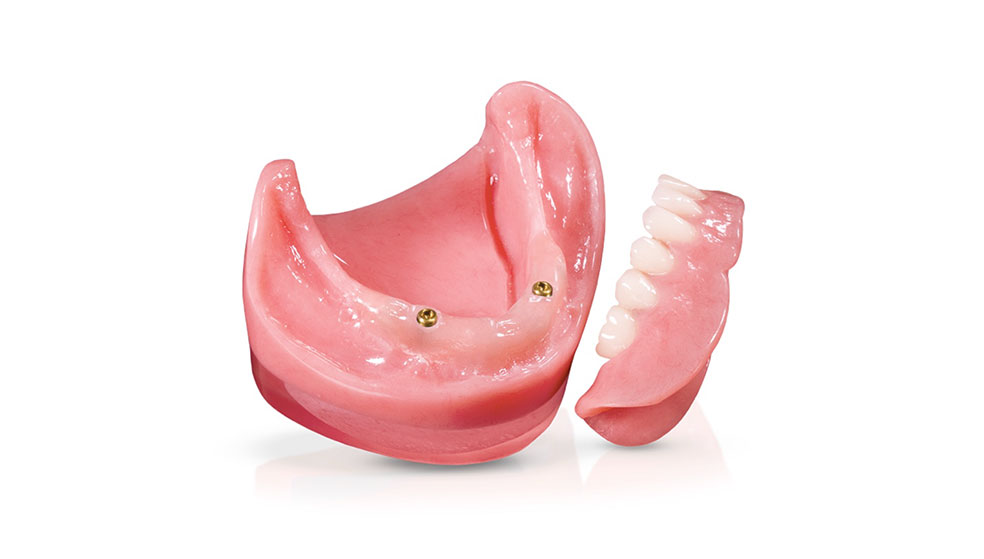
Fabricated by experienced lab technicians to ensure an optimal fit and beautiful esthetics, Glidewell implant overdentures offer a cost-effective means of stabilizing patients’ dentures, improving prosthetic retention, function and speech.
The implant-retained overdenture — typically supported by two to four implants in the mandible, or four or more in the maxilla — provides a meaningful upgrade in stability and function over a conventional denture while remaining removable. The Locator® Overdenture from Glidewell is fabricated through a straightforward clinical workflow and is indicated as a removable, implant-retained restorative solution for the fully edentulous arch, providing improved bite force, chewing capability, comfort, and phonetics over a conventional denture.
This option is recommended when the patient does not have sufficient bone volume to support the number of implants in the correct positions needed to provide adequate anterior-posterior (A-P) spread for a fixed restoration. It is also appropriate when grafting is contraindicated or declined, and for patients who want the retention and stability benefits of implant support, but whose budget does not extend to a fixed full-arch prosthesis.
Critically, the overdenture is not a dead end. Glidewell’s full-arch solutions allow existing Locator Overdenture patients to be converted to a fixed solution at a future point — making it a viable first phase for patients whose health, bone volume, or finances may improve over time.
Mini Implant Overdenture
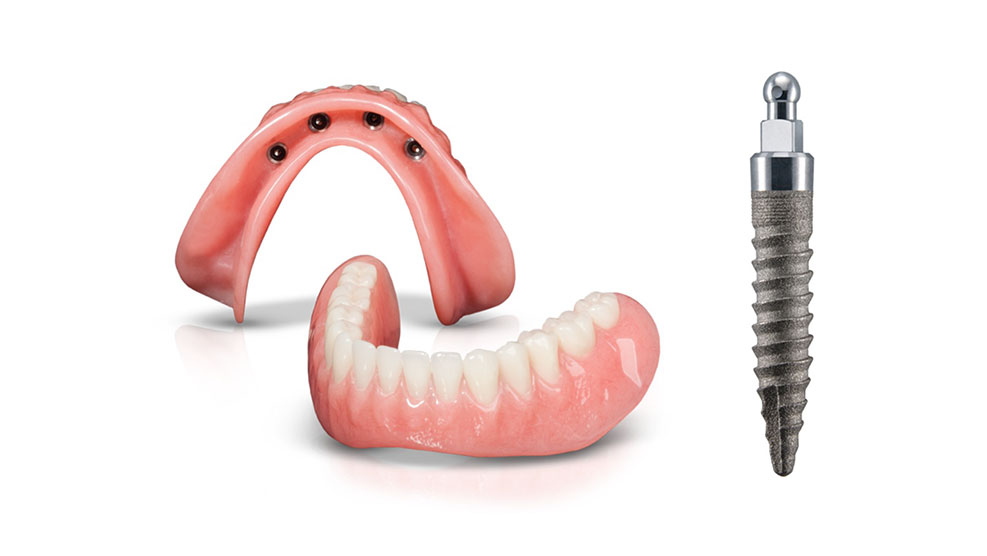
Ideal for patients with medical, anatomical or financial limitations, Mini Implant Overdentures from Glidewell offer patients improved stability and function in as little as one appointment.
When an edentulous patient wants more stability and functionality in their denture but is not a candidate for a restoration over conventional-diameter implants, the Mini Implant Overdenture offers a low-cost, effective solution. Patients with medical, anatomical or financial limitations still get access to a solution with immediate loading and long-term stabilization.
This type of overdenture anchors to mini implants through a simple O-ring retention system, allowing clinicians to provide patients with a stable restorative prosthesis in a single appointment. Mini implants allow patients who have narrow ridges or can’t undergo bone grafting procedures to experience the benefits of implant treatment through a minimally invasive surgical protocol.
Locator Fixed Prosthesis
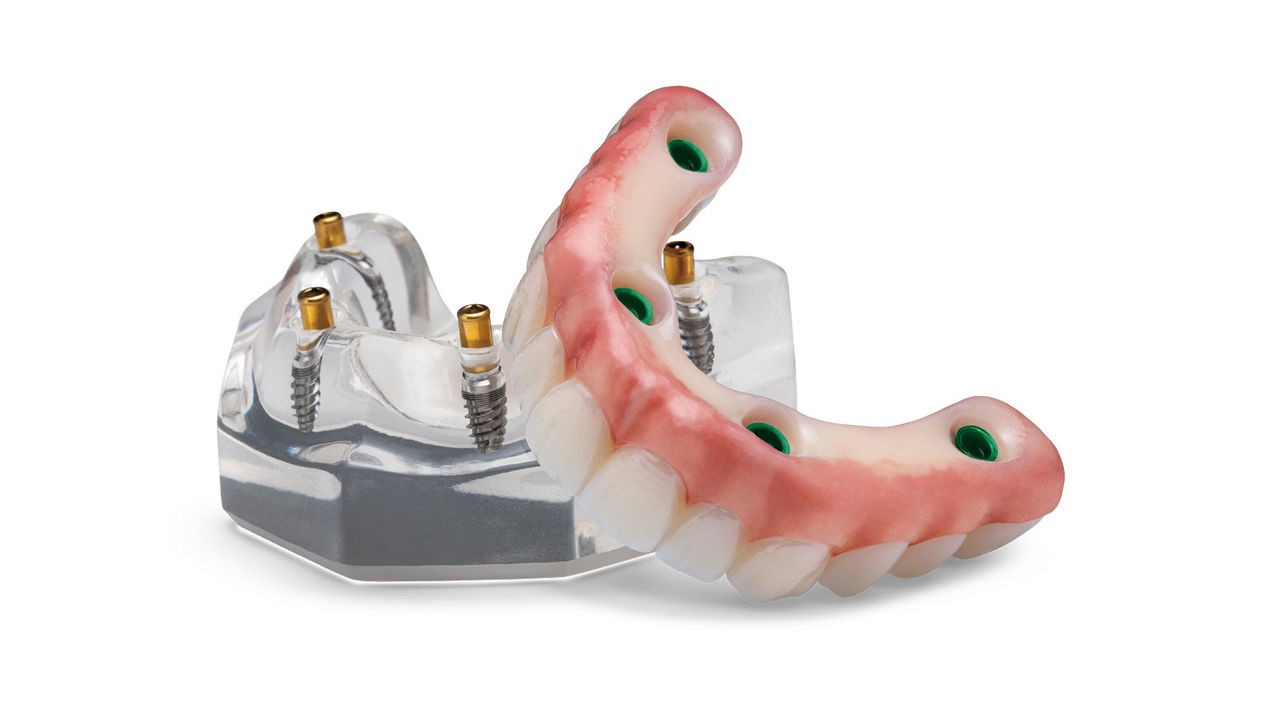
Using the same Locator abutment and attachment technology that many dentists are familiar with, the Locator Fixed Prosthesis serves to restore patients' dental function, confidence and smile with ease.
For patients who want a fixed result but for whom traditional All-on-X is cost-prohibitive or technically out of reach, the Locator Fixed Prosthesis offers a middle path. It snaps onto Locator abutments with a high level of retention — enough that it does not become dislodged during function — while requiring less vertical space than a full screw-retained All-on-X restoration. It represents a clinically sound bridge between the removable overdenture and the premium fixed arch, and can be a practice-expanding option for clinicians building their full-arch volume.
Fixed Full-Arch Implant Prosthesis (All-on-X)
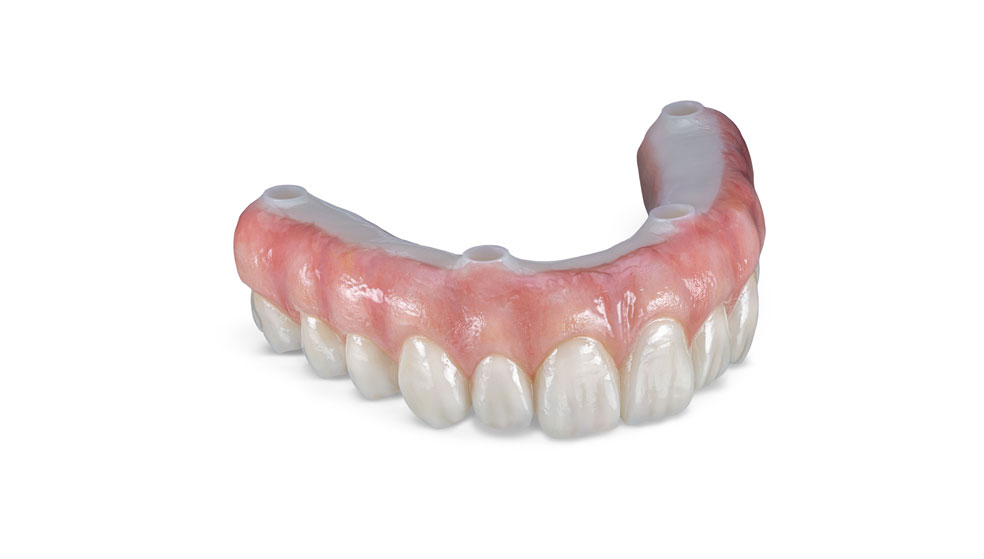
Constructed from 100% solid zirconia, the BruxZir® Full-Arch Implant Prosthesis is a lifelike, high-strength solution for All-on-X cases backed by a lifetime warranty and expert technical support throughout the restorative process.
The All-on-X framework — typically four to six implants supporting a fixed, screw-retained full-arch prosthesis — is the most comprehensive tooth replacement solution available for fully edentulous patients. It eliminates the removability of the overdenture, delivers superior bite force and function, and provides the psychological and social confidence of fixed teeth. For the right patient, it is life changing.
It also demands the most in terms of bone volume, surgical planning, restorative precision and patient investment. The All-on-X format requires accuracy in impression-taking that precisely reproduces implant positions in all dimensions, and it carries a cost that can be prohibitive for patients without financing or phased planning.
When the clinical conditions are right — adequate bone with appropriate A-P spread, a medically suitable patient, and an aligned financial commitment — All-on-X supported by a BruxZir® Full-Arch Implant Prosthesis from Glidewell delivers a restoration with lifelike esthetics, proven durability, and a lifetime warranty. The BruxZir full-arch prosthesis is constructed from 100% solid zirconia, avoiding the chips, stains and fractures known to compromise acrylic hybrid dentures over time.
Full-arch implant surgery is where the margin for error is smallest and the cost of intraoperative surprises is highest. Digital treatment planning is not just a workflow convenience at this level. It’s a clinical risk management tool.
Glidewell’s Digital Treatment Planning (DTP) team provides prosthetically driven guidance across the full range of full-arch cases. Every case is planned by a DTP expert with the final restoration in mind, ensuring that implant positioning supports long-term prosthetic goals before the patient is in the surgical chair. This top-down approach — designing the restoration first, then working back to determine ideal implant placement — is the foundation of predictable full-arch outcomes.
For practices ready to advance to guided full-arch surgery, GlidePRO™ stackable surgical guides from Glidewell’s DTP team simplify every phase of a full-arch procedure. Each GlidePRO system combines bone reduction, osteotomy, implant placement, and provisionalization into a single, multi-phase guide architecture — with flat-rate pricing across most major implant systems.
GlidePRO’s same-day design service enables clinicians to submit intraoral scans the morning of surgery and receive a provisional design the same day, allowing patients to leave the surgical appointment with a fixed, esthetic provisional in place. The system supports multiple scanning methods, including photogrammetry, OPTISPLINT®, and horizontal scan bodies, giving practices flexibility without sacrificing accuracy or predictability.
For practices building their full-arch volume at different speeds, Glidewell offers three restorative service pathways:
Use this guide to determine the most appropriate full-arch solution for each fully edentulous or soon-to-be edentulous patient:
Step 1: Confirm Surgical Candidacy
Step 2: Assess Bone Volume and Anatomy
If grafting contraindicated or declined → overdenture pathway indicated
Step 3: Evaluate Patient Goals and Lifestyle
Step 4: Align on Financial Realities
Step 5: Select the Restoration
Step 6: Plan the Surgical Workflow
There is no universal answer to tooth replacement. But there is a reproducible process for arriving at the right one. Start with health. Assess the anatomy. Quantify the bone. Understand the budget. When those four inputs are clear, the treatment path usually follows.
For the fully edentulous patient, that same logic applies, but the stakes are higher and the range of solutions is broader. The decision between a conventional denture, an overdenture, a Locator Fixed Prosthesis, and a full fixed arch is not merely a financial one. It is a clinical one, informed by bone volume, systemic health, patient expectations, and the surgical and restorative infrastructure available to support the case.
The goal of this framework isn’t to replace clinical judgment. It’s to make sure that judgment is applied to the right variables, in the right order, every time, so patients get care that fits their lives, and practices build cases they can deliver with confidence.
For more information on Glidewell’s full range of tooth replacement options, from single-unit implants to full-arch digital workflows, visit our implant solutions page or call 800-839-9755.
Send blog-related questions and suggestions to hello@glidewell.com.

2201 Dupont Dr., Irvine, CA 92612
© 2026 Glidewell. All rights reserved.